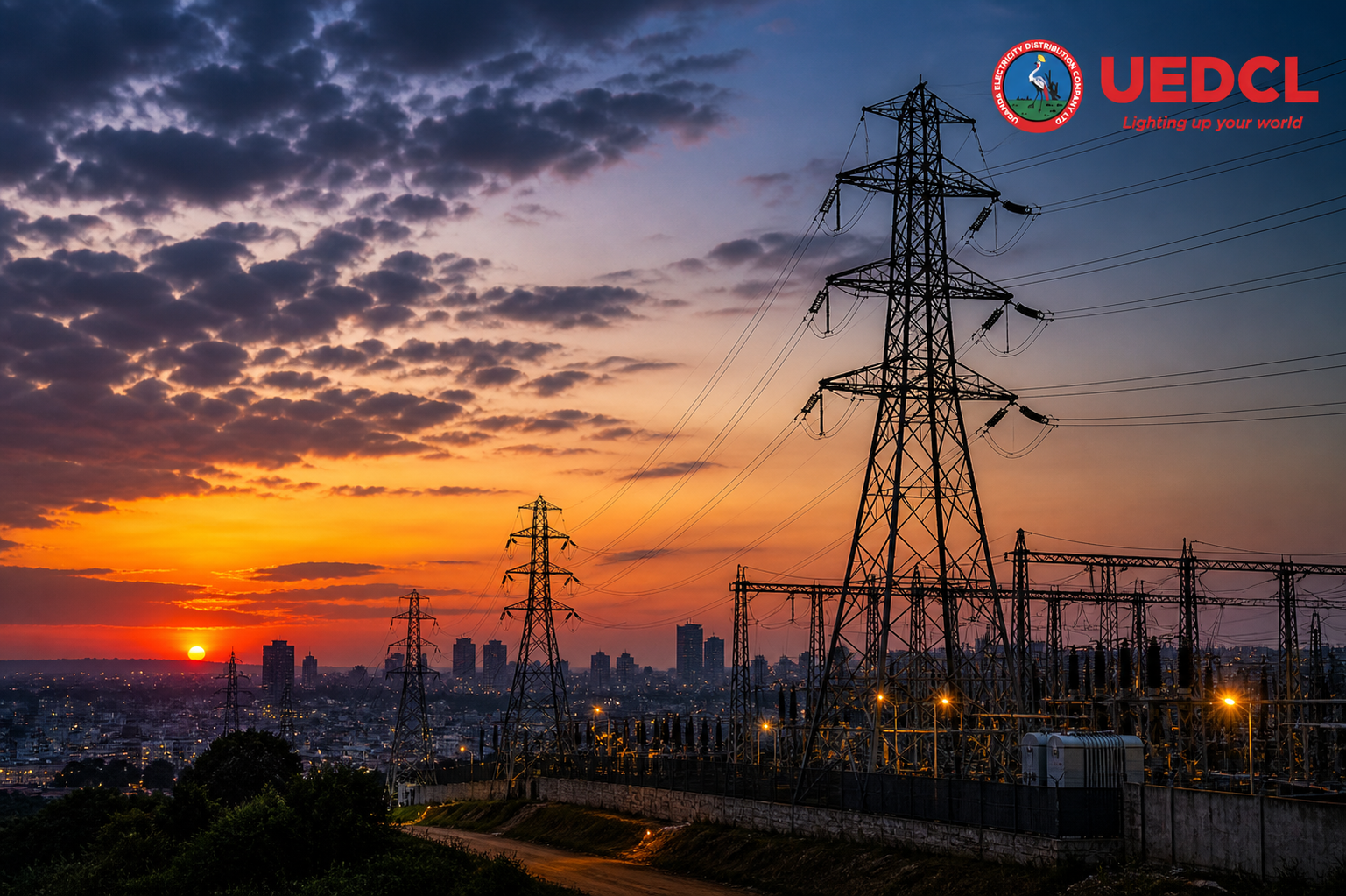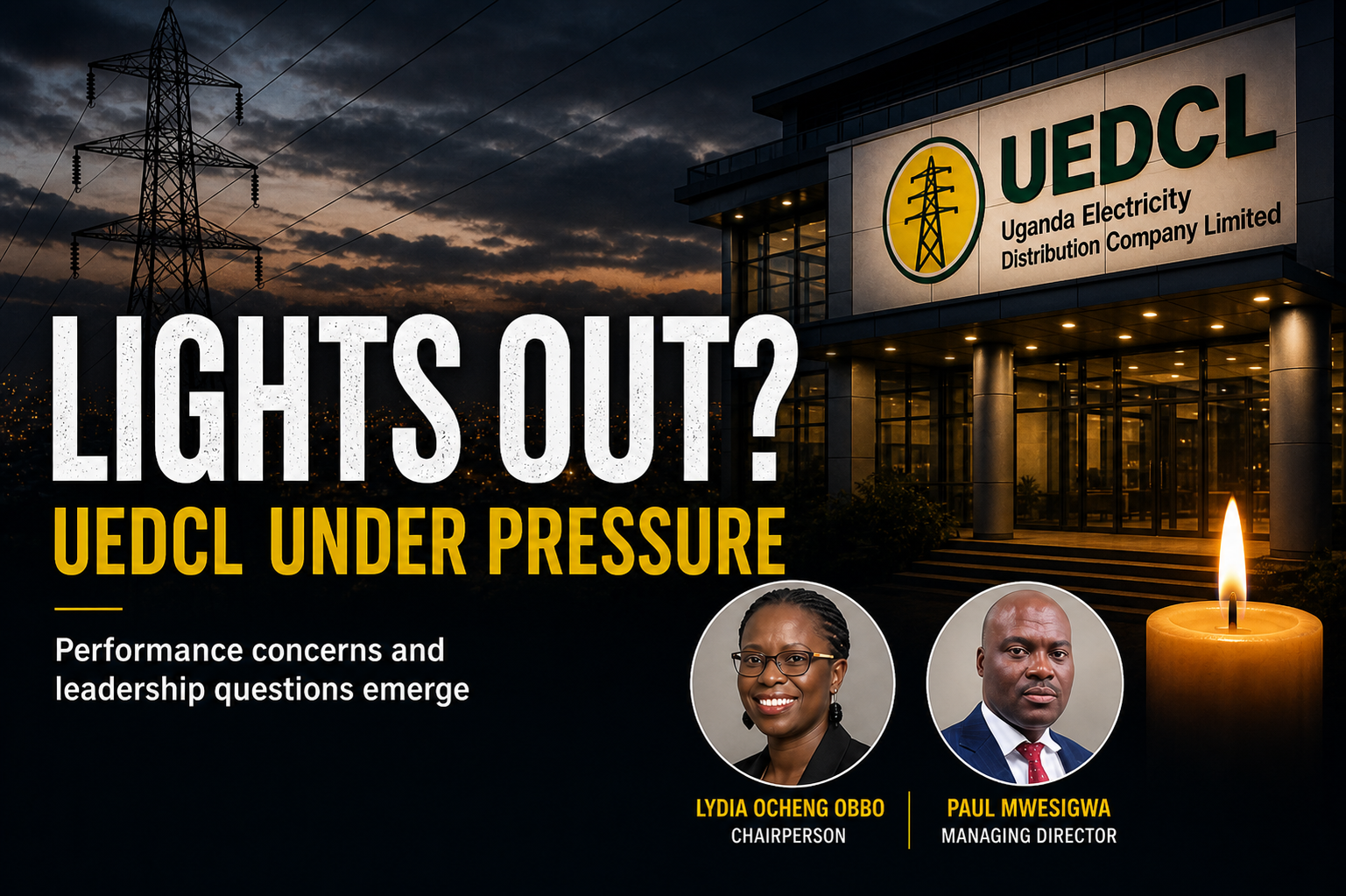
The end of Umeme Limited’s electricity distribution concession and the rise of Uganda Electricity Distribution Company Limited (UEDCL) has reignited a familiar debate: should critical public services be privately managed or state-run? It is the wrong debate.
Uganda’s infrastructure challenge has never been ownership alone. It has always been performance.
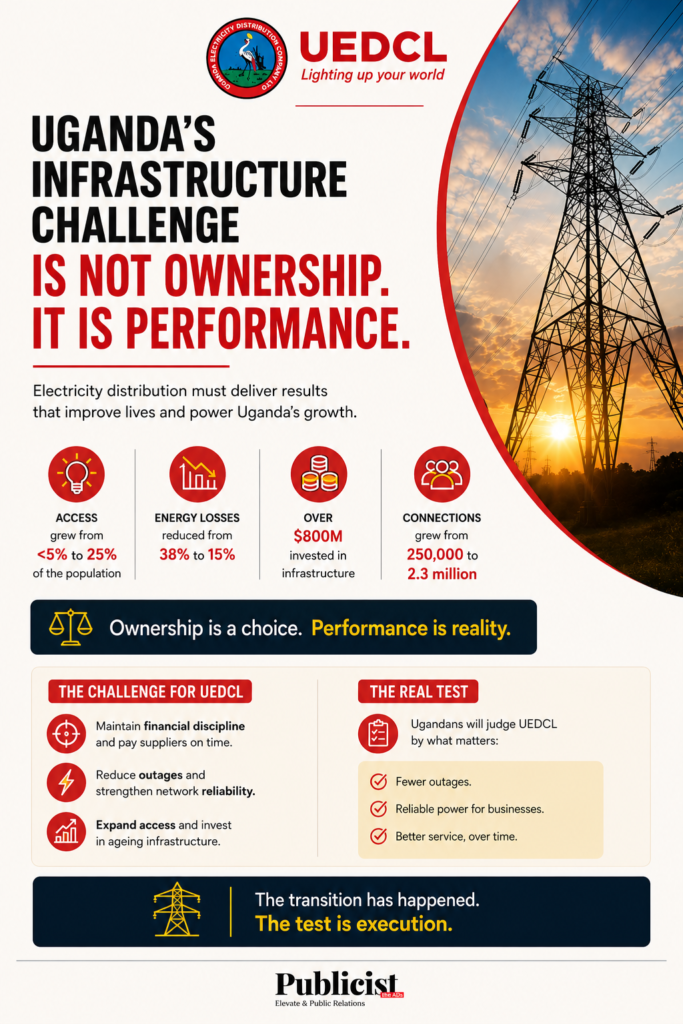
To be fair to Umeme, the numbers reflect significant progress over two decades. The company expanded electricity access from less than 5% to 25% of the population, reduced energy losses from 38% to about 15%, and invested over $800 million in infrastructure. Customer connections grew from roughly 250,000 to over 2.3 million, while annual revenue collection rose from UGX 160 billion to UGX 2.5 trillion.
But this progress came at a cost many Ugandans found difficult to accept. Household tariffs in 2024 were still higher, after inflation adjustment, than when Umeme took over. At the same time, nearly half the country remained without electricity access.
The point is not to re-litigate the concession. It is to understand what these numbers reveal: electricity distribution is a capability-intensive business, where outcomes depend far more on institutional strength, governance, incentives, management systems, and access to capital, than on who holds the licence.
Global experience offers no simple answers. Successful public utilities exist. So do successful private operators. So do failures in both categories. Ownership is a governance choice. Performance is what citizens actually experience.
That burden of proof has now shifted fully to UEDCL.
Early signals are mixed but important. The company reportedly collected 99.5% of revenue in its initial months, compared to about 98% under Umeme, and cleared supplier payments with no outstanding invoices. But the inherited challenges remain substantial.
Between May 2025 and March 2026, UEDCL recorded over 4,400 hours of total outage duration, with parts of the network operating beyond safe capacity limits. Internal assessments identified about 3,500 overloaded transformer zones nationwide, of which between 518 and 600 are critically damaged, with only 79 addressed as of late 2025.
A state-owned utility must now simultaneously maintain financial discipline, expand access, invest in ageing infrastructure, and retain technical talent, all within public sector governance constraints. It is a demanding combination.
The success of UEDCL will not be measured by the fact that it replaced Umeme. It will be measured by whether households experience fewer outages, businesses receive more reliable power, and service quality improves over time. The transition has happened. The debate has moved from ownership to execution. That is where the real test begins.