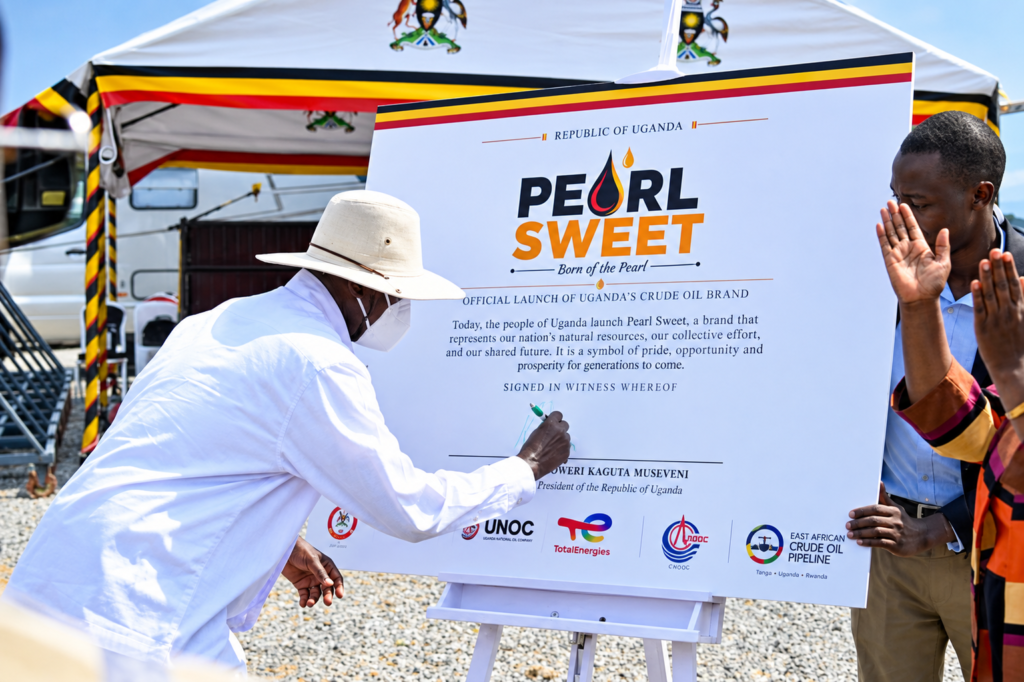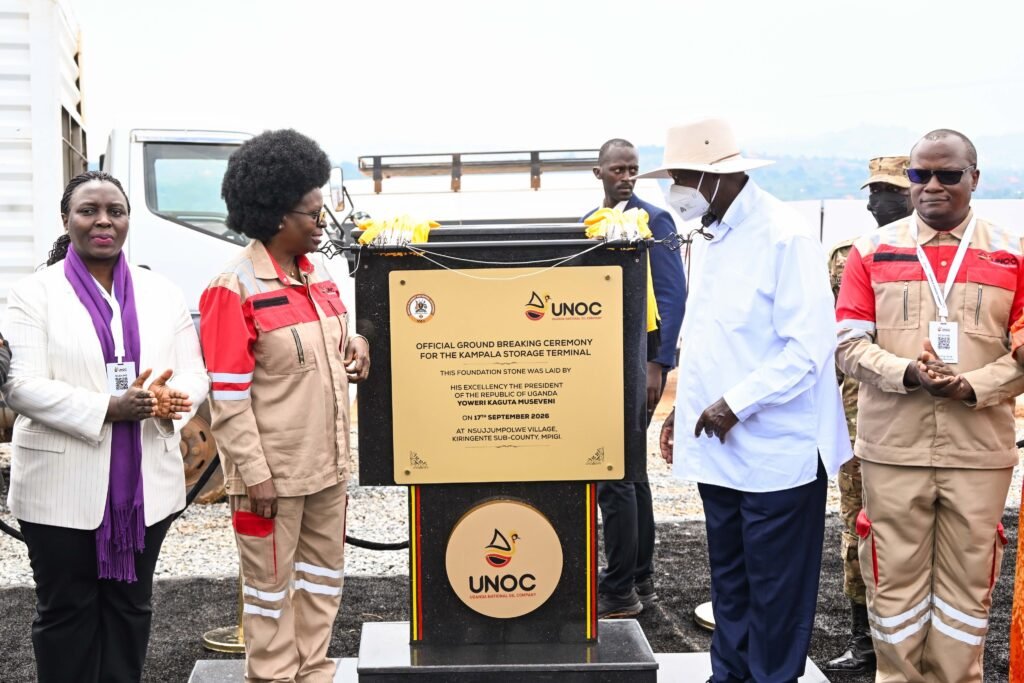

After years of strategic planning and significant investment, Uganda’s long-awaited journey to become an oil-exporting nation is about to be realised. The East African Crude Oil Pipeline (EACOP), a pivotal USD5 billion infrastructure project, has officially entered its “12-month sprint,” with completion now firmly targeted for July 2026.
This crucial milestone sets the stage for Uganda to achieve its “first oil” export in the second half of 2026, ushering in a transformative era for the nation’s oil and gas sector and its broader economy.
The 1,443-kilometer pipeline, also known as the Uganda–Tanzania Crude Oil Pipeline (UTCOP), is designed to transport crude oil from Uganda’s flagship upstream projects, the Tilenga oilfield (projected 190,000 barrels per day capacity) and the Kingfisher oilfield, to the Port of Tanga, in Tanzania, on the Indian Ocean.
This week, EACOP engineers informed reporters during a site tour that the remaining year will see the full completion of the pipeline and all necessary support infrastructure.
Multibillion Dollar Project Nears Fruition
The EACOP project has evolved significantly since its initial planning in 2013 and groundbreaking in 2017. While initially estimated at USD3.5 billion, the cost has since risen to USD5 billion due to global factors like the COVID-19 pandemic, inflationary pressures, environmental concerns, and escalating material costs.
Financing for the EACOP construction is a blend of equity and debt. Project owners, including TotalEnergies, CNOOC, Uganda National Oil Company (UNOC), and Tanzania Petroleum Development Corporation (TPDC), have collectively contributed approximately USD2 billion in equity, complemented by an additional USD2.4 billion to USD3 billion secured in external debt.
The pipeline’s physical completion will mark the critical link between Pump Station 1 (PS-1) of the EACOP and Uganda’s key upstream production facilities.
Impact of EACOP’s Completion on the Oil and Gas Sector
The operationalisation of EACOP will be a game-changer, fundamentally reshaping Uganda’s oil and gas landscape in the following ways:
Transition from Developer to Exporter
For decades, Uganda has been known for its oil discoveries. However, with EACOP, it transitions from a country with proven reserves to an active oil producer and exporter. This shifts the focus from exploration and development to production, transportation, and international sales.
Unlocking Commercial Production
The pipeline is the indispensable artery for commercialising Uganda’s crude oil reserves. Without it, the vast quantities of oil discovered in the Albertine Graben would remain economically inaccessible. Its completion is the prerequisite for sustained, high-volume production from Tilenga and Kingfisher.
Revenue Generation and Economic Diversification
First oil means significant foreign exchange earnings will begin flowing into Uganda’s national treasury. These revenues are earmarked for critical national development programs, infrastructure projects, and social services. While the oil sector itself contributes directly, the generated wealth is expected to drive growth in non-oil sectors, aiding economic diversification.
Local Content Promotion and Job Creation
While the construction phase generated substantial employment and local business opportunities, the operational phase of both the upstream facilities and the pipeline will sustain long-term, high-value jobs in areas like maintenance, logistics, security, and specialised technical services. This reinforces the government’s local content agenda, ensuring Ugandans continue to benefit from the sector’s activities.
Enhanced Infrastructure and Industrialisation
The development of the oil and gas sector, including the pipeline and associated facilities, has necessitated significant investments in supporting infrastructure such as roads, power supply, and logistical hubs. This infrastructure will have broader spill-over effects, benefiting industries in other regions and potentially driving further industrialisation.
Regional Energy Hub Potential
By facilitating the movement of crude oil, EACOP strengthens Uganda’s role within regional energy dynamics. It also enhances economic ties with Tanzania, fostering cross-border collaboration and potentially attracting further regional investments in energy infrastructure.
Global Positioning
Becoming a crude oil exporter elevates Uganda’s profile on the international energy stage, enhancing its geopolitical and economic standing and opening new avenues for trade and partnerships.
As the “12-month sprint” commences, all eyes are on Uganda and the EACOP. The successful completion of this massive project will not only fulfil a long-held national aspiration but also fundamentally transform Uganda’s economic trajectory, ushering in an era of enhanced energy security, significant revenue generation, and sustained development.