
While the broader African refining market presents an undervalued opportunity, for Uganda, the development of its own petroleum refinery is not merely an investment prospect, it is a foundational project for achieving energy sovereignty, industrial growth, and long-term economic security. As global analysts highlight the continent’s potential, Uganda stands at a pivotal moment to translate its substantial oil and gas resources into tangible national development.
Uganda’s story is unique. Unlike many African producers, the nation’s journey has been one of deliberate planning. With discoveries in the Albertine Graben estimated at 6.5 billion barrels of oil, the focus has shifted from mere extraction to integrated value addition. The upcoming crude production, projected to peak at 230,000 barrels per day, is intrinsically linked to the Uganda Oil Refinery project.
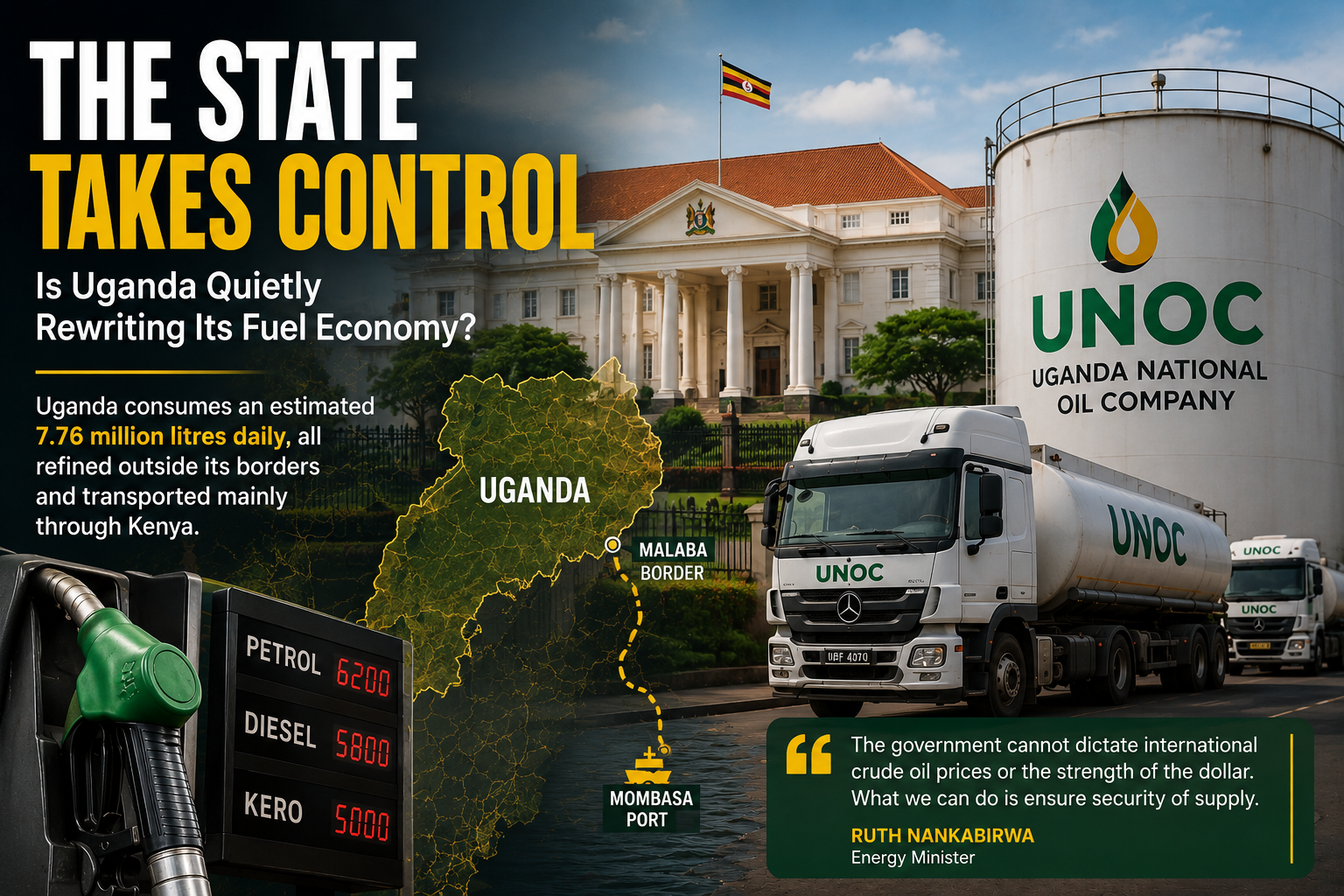
This project directly addresses the core challenge highlighted in continental reports: the crippling cost of importing refined products. Uganda currently spends hundreds of millions of dollars annually on importing diesel, gasoline, and kerosene, leaving its economy vulnerable to global price shocks and supply chain disruptions. The domestic refinery will initially produce an estimated 60,000 barrels per day of products like petrol, diesel, and jet fuel, significantly displacing imports and insulating the economy. This is a direct step towards “making energy poverty history” within its own borders.
The refinery is more than a fuel source; it is a catalyst. The African Energy Chamber’s outlook correctly identifies that developing local industries and technical expertise is a key benefit of downstream investment. For Uganda, the refinery project is the cornerstone of a larger industrial ecosystem.
The planned Kabaale Industrial Park, adjacent to the refinery site in Hoima, is designed to host industries that will use the refinery’s output as feedstock. This includes fertilizers for agriculture, plastics manufacturing, and asphalt for infrastructure development. This creates a multiplier effect: jobs are created not only in construction and operations at the refinery but across a new manufacturing value chain. The development of technical expertise, through targeted training and knowledge transfer, will build a skilled national workforce for decades to come.
The article’s reference to the Dangote refinery is instructive. While a monumental achievement, its primary focus on exports highlights a key risk: that large-scale projects may not always prioritize domestic market needs. Uganda’s model, however, is fundamentally different. The refinery is conceived first and foremost to serve the Ugandan market and the wider East African Community, a region with rapidly growing energy demand.
This regional focus is a strategic advantage. It ensures a ready market for the refinery’s output, making the project commercially viable while directly addressing the energy needs of a population driving increased consumption. Uganda’s approach mitigates the risk of becoming an exporter of crude oil only to remain a high-cost importer of refined goods.
So, what is Uganda doing to attract the necessary investment? The government has taken significant steps to create a conducive environment, aligning with the prerequisites mentioned in the continental analysis.
The Petroleum (Refining, Conversion, Transmission, and Midstream Storage) Act, 2013 provides a clear legal and regulatory framework for investors.
The Uganda Refinery Holding Company (URHC) represents government interest, while the search for a lead private investor ensures commercial discipline and technical expertise. This PPP model shares risk and reward effectively.
The establishment of the Petroleum Authority of Uganda (PAU) as a single regulator helps streamline approvals and oversight, reducing bureaucratic hurdles.
The ongoing, transparent process to select a lead investor for the refinery project signals Uganda’s commitment to a fair and competitive investment climate.