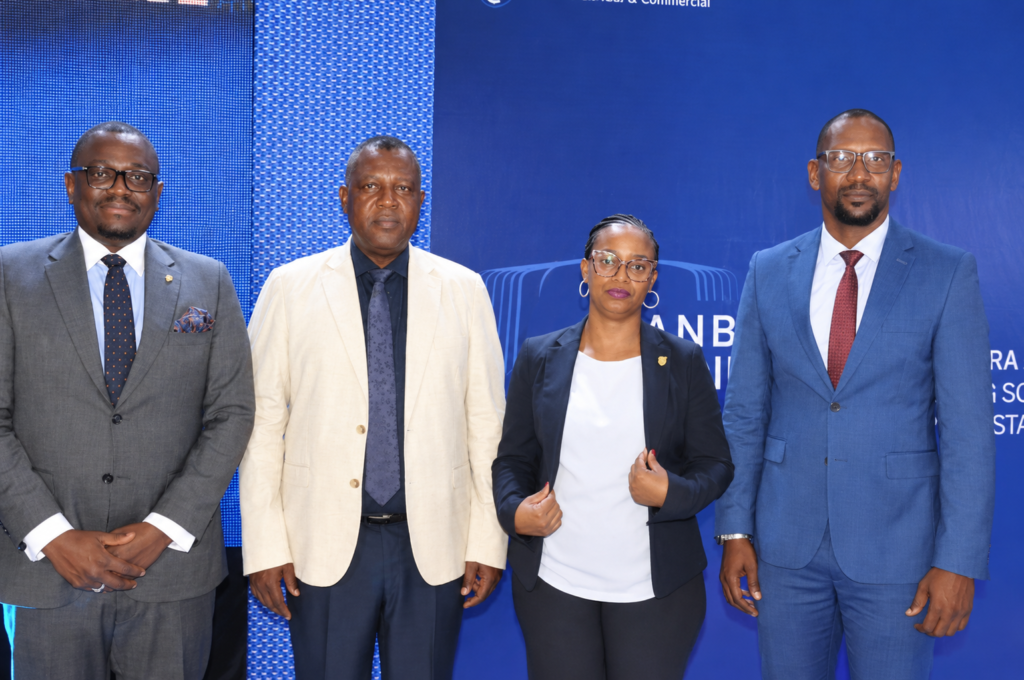
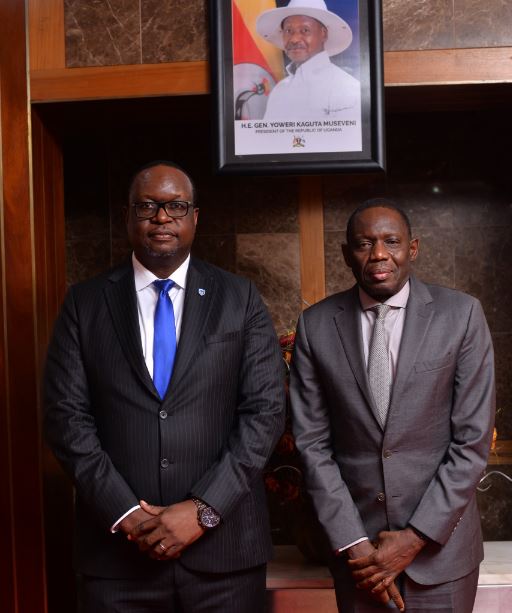
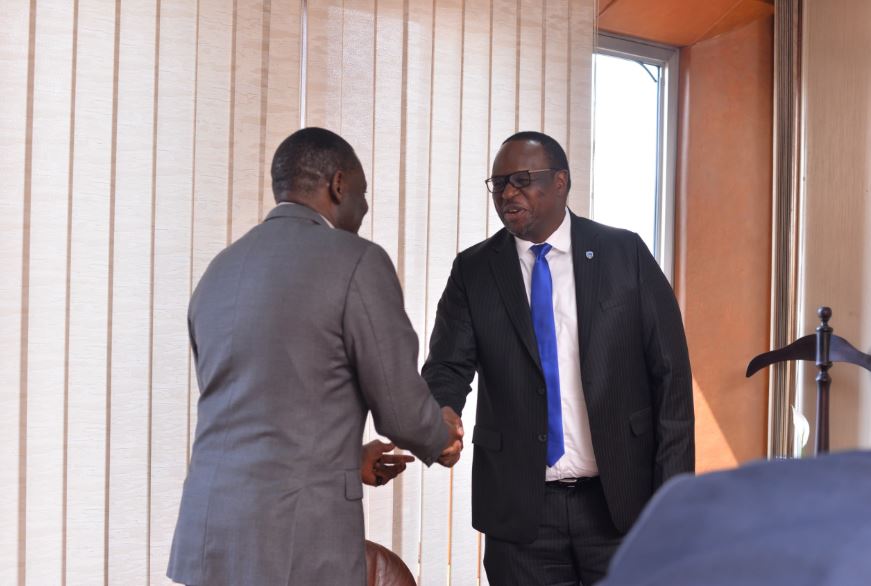
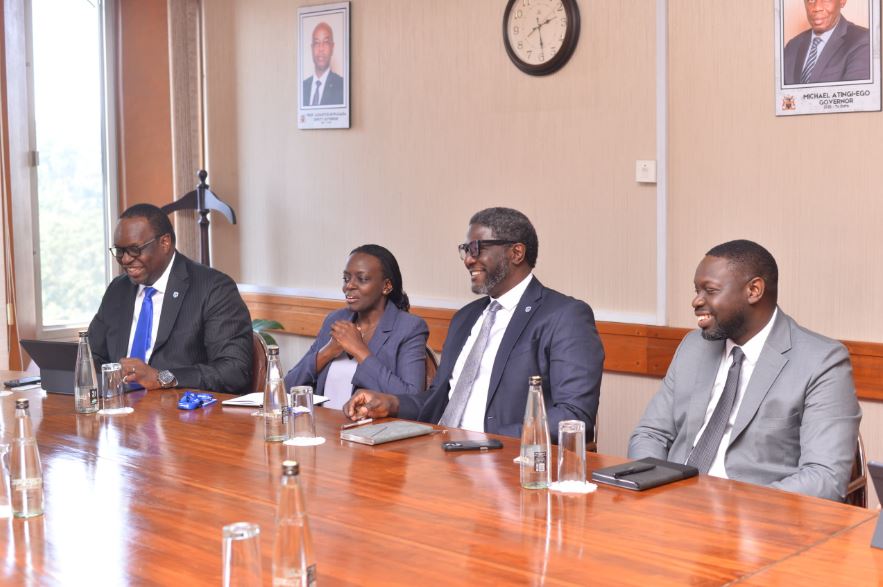
In a significant display of collaboration at the apex of Uganda’s financial sector, on Thursday, July 31, 2025, Mr. Mumba Kenneth Kalifungwa, the new Chief Executive of Stanbic Bank Uganda, paid a courtesy visit to the Governor of the Bank of Uganda (BoU), Mr. Michael Atingi-Ego.
This high-level meeting, which focused on “issues of mutual benefit,” signals a strengthened partnership between Uganda’s largest commercial bank and its central regulator, a collaboration critical for navigating the country’s promising yet complex economic landscape.
Uganda’s economy is currently on a robust growth trajectory, with projections from the World Bank and IMF forecasting GDP growth to reach 6.2% and 7.5% in FY25, respectively, driven by agriculture, services, and the budding oil and gas sector set for first oil production by mid-2026.
However, this growth also comes with challenges, including managing inflation (currently around 3.5% headline and 3.9% core as of April 2025, with the BoU maintaining a tight monetary policy stance), ensuring financial inclusion, and stabilising the exchange rate amidst global uncertainties.
What This Collaboration Means for Uganda’s Economy
The relationship between the central bank and Stanbic Bank is the bedrock of a stable and thriving financial system. This meeting between Kalifungwa and Atingi-Ego thus has profound implications for Uganda’s economic stability and growth, some of which include:
Enhanced Monetary Policy Transmission
The Bank of Uganda primarily uses its Central Bank Rate (CBR) and open market operations to manage liquidity and control inflation. For these policies to effectively transmit to the broader economy, strong communication and cooperation with commercial banks are essential.
Stanbic Bank, being a dominant player with a vast network and significant market share (with Shs7.1 trillion in customer deposits and Shs4.4 trillion in net loans and advances in 2024), is crucial in influencing lending rates, credit availability, and overall market liquidity. A well-aligned Stanbic can ensure that the central bank’s policy signals are effectively translated into market actions, contributing to price stability.
Bolstering Financial Sector Stability
The BoU’s core mandate includes regulating the financial sector to protect depositors and preserve financial stability.
Regular dialogues between the central bank Governor and leaders of key commercial banks like Stanbic allow for the exchange of critical market intelligence, early identification of potential risks (e.g., non-performing loans, liquidity pressures), and coordinated responses to maintain systemic soundness.
This proactive engagement is vital in mitigating potential shocks and building resilience within the financial system.
Driving Economic Growth in Priority Sectors
As Uganda pushes for accelerated growth in areas like agro-industrialisation, tourism, manufacturing, and oil and gas, commercial banks are key financiers.
Stanbic Bank’s strong performance, with Shs478 billion profit after tax in 2024, signifies its capacity to extend credit. For instance, Stanbic Bank is one of the key financiers of the East African Crude Oil Pipeline (EACOP), a project that will scale the oil and gas sector.
Discussions with the BoU can align Stanbic’s lending strategies with national development priorities, ensuring that adequate and affordable financing reaches strategic sectors. This synergy can unlock private sector investment and accelerate job creation.
Advancing Financial Inclusion
Both the BoU and Stanbic Bank have a shared interest in deepening financial inclusion. Stanbic Bank’s existing initiatives, such as ‘Stanbic for Her’ (which facilitated Shs173 billion in low-interest loans for women entrepreneurs in 2024) and the ‘Stanbic Business Incubator’ (supporting over 3,000 enterprises in 2024 and extending Shs76 billion in credit), directly contribute to the BoU’s mandate of broadening access to financial services, especially for underserved populations, through the Women, Youth and Farmers (WYF) agenda. Such high-level meetings foster continued innovation and collaboration in this critical area.
What This Means for Stanbic Bank
For Stanbic Bank Uganda, this courtesy visit by its new CEO signifies several benefits, among them:
Reinforced Regulatory Confidence
A direct engagement with the central bank Governor establishes a strong working relationship and reinforces regulatory confidence in Stanbic’s leadership and strategic direction. This is particularly important for a bank that is a pillar of the financial system and a leading taxpayer, contributing Shs427.8 billion in taxes in 2024.
Strategic Alignment
The meeting provides an invaluable opportunity for Stanbic to align its commercial strategies with the Bank of Uganda’s monetary policy stance and broader financial sector development goals. This alignment can lead to more stable and predictable operating environments, crucial for long-term business planning.
Advocacy and Collaboration
It allows Stanbic to directly advocate for policies that support the banking sector’s growth and stability, while also exploring collaborative opportunities on national initiatives, such as financial literacy, payment system modernisation, or sustainable finance.
Leadership Positioning
As the new CEO, Kalifungwa’s prompt engagement with the BoU Governor underscores Stanbic’s commitment to responsible banking and its role as a key partner in Uganda’s economic journey. It reinforces Stanbic’s position at the forefront of the Ugandan financial sector.
In an economy set for significant transformation driven by oil and gas, strategic infrastructure development, and a vibrant private sector, the robust collaboration between the Bank of Uganda and commercial banking giants like Stanbic Bank Uganda is not merely a formality.
It is a fundamental cornerstone for ensuring macroeconomic stability, fostering inclusive growth, and building a resilient financial system capable of supporting Uganda’s ambitious future.