East Africa has spent decades trying to attract more tourists. Now, some of its most valuable destinations face a different challenge: how much tourism can they absorb before success begins damaging the very attractions visitors come to see?
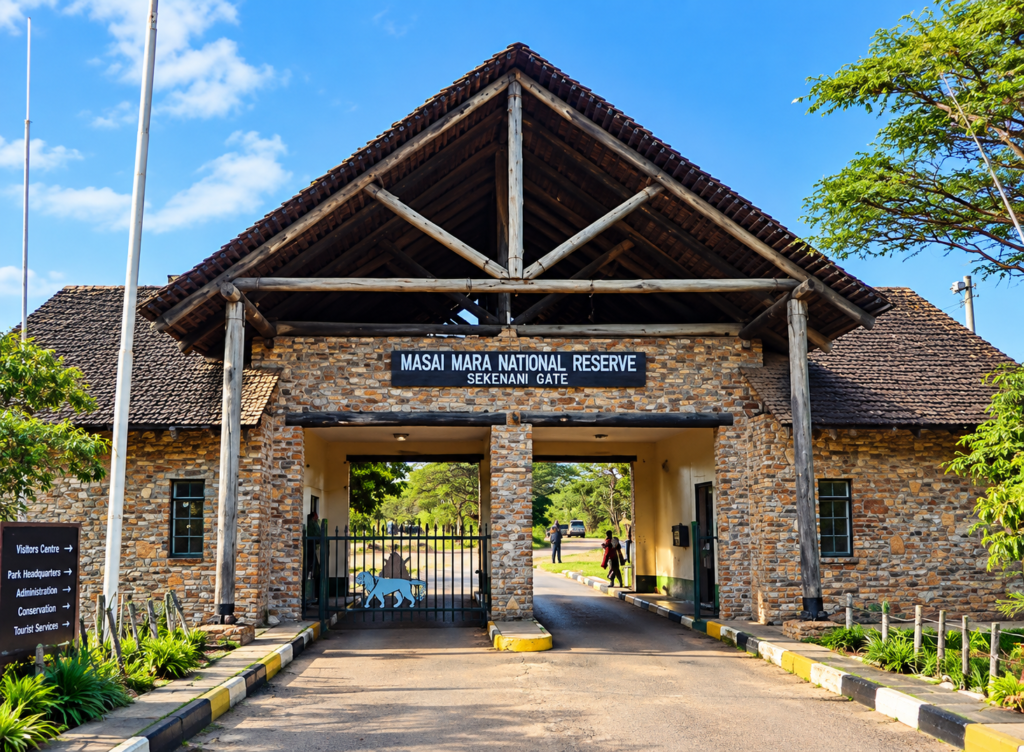
The debate is particularly visible in Kenya’s Maasai Mara, where wildlife tourism has created enormous economic value but also intense pressure at the places where visitors want to be at the same time.
During peak migration periods, dozens of safari vehicles can converge around wildlife sightings and river crossings. The Maasai Mara National Reserve Management Plan identifies congestion at migration crossings as a major visitor-management challenge and records instances of more than 150 vehicles at a single crossing.
That number illustrates an important distinction in tourism planning. A destination does not necessarily have to be overwhelmed across an entire year for tourism to become environmentally damaging. Pressure can be concentrated in a particular location, on a particular day or around a particular wildlife event.
The result is a paradox. A park may have a manageable annual visitor total while a river crossing, predator sighting or popular viewpoint becomes a traffic jam.
The Maasai Mara‘s own numbers show why annual totals need to be read carefully. Visitor numbers rose from about 249,900 in 2022 to 420,100 in 2023 before falling to approximately 343,100 in 2024. The decline does not mean pressure has disappeared. Instead, it reinforces the difference between overall visitation and how tourism is distributed across space and time.
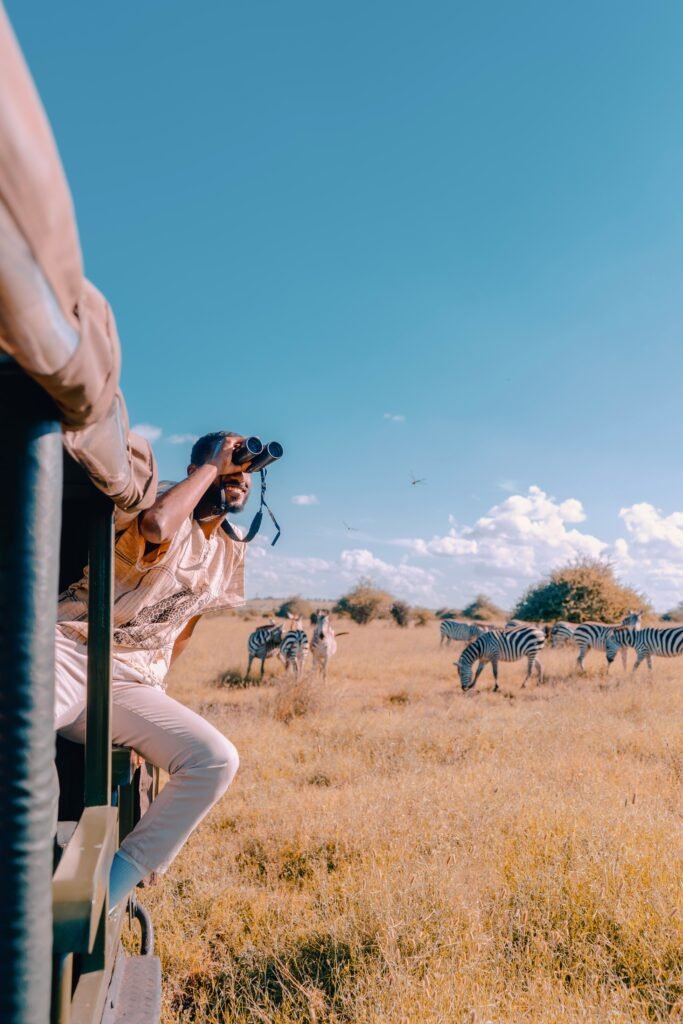
When dozens or even more than 100 vehicles converge on a single wildlife event, the safari experience changes. What is supposed to be an encounter with wilderness can begin to resemble a spectator event.
The wilderness is not merely the setting for the tourism product. It is the product. That makes the debate over new tourism infrastructure equally important.
The Ritz-Carlton Maasai Mara Safari Camp, which opened in 2025 with 20 tented suites, has become one of the most visible examples of the tension between luxury tourism development and conservation concerns.
The legal history requires some precision. An earlier petition challenging the camp alleged that its structures along the Sand River obstructed wildlife movement, affected a migration corridor and caused ecological damage, among other claims. The developers and other respondents disputed the allegations and argued that the required approvals had been obtained, including an environmental impact assessment licence issued by Kenya’s National Environment Management Authority in May 2024. In March 2026, the Environment and Land Court in Narok dismissed that petition, finding that the complainant had not first exhausted the relevant statutory environmental and wildlife dispute mechanisms.
That did not end the wider dispute over tourism development in the Mara. In July 2026, a separate legal challenge involving the Ritz-Carlton and other luxury developments was filed, with environmental organisations and lawyers arguing that some developments threaten protected ecological areas and wildlife migration routes.
The litigation does not by itself establish that the developments are environmentally damaging. What it does demonstrate is the growing conflict over how much commercial infrastructure a globally important wildlife destination can accommodate.
The economic incentives for continued growth are obvious.
The East African Community recorded approximately 8.5 million international tourist arrivals in 2024, above the 7.7 million recorded in 2019, and has set an ambition of exceeding 11 million arrivals by 2027.
Individual markets are also expanding. Kenya recorded 2.42 million international arrivals in the 2024/25 financial year, generating KSh458.2 billion in tourism earnings.
Tanzania recorded 2.29 million international visitors in 2025 and tourism earnings of about $4.41 billion. More significantly for the value-versus-volume debate, average tourist expenditure increased to $289 per person per night, meaning earnings grew faster than arrivals.
Uganda is on a similar trajectory. International arrivals reached 1.64 million in 2025, while tourism receipts climbed to UGX5.83 trillion, according to the Ministry of Tourism, Wildlife and Antiquities. Average length of stay also rose to 8.8 nights.
These numbers make tourism growth economically attractive. Tourism brings foreign exchange, employment, investment, tax revenues and income to communities around attractions.
But they also create a difficult question: what happens when the infrastructure required to serve more visitors begins changing the destination itself?
As demand rises, destinations need more accommodation, roads, airstrips, restaurants, utilities and other facilities. Each project may appear manageable in isolation. Collectively, however, development can alter landscapes, increase traffic and put pressure on habitats and wildlife movement.
Tourism infrastructure therefore creates a planning contradiction. It makes a destination easier to access while potentially making the wilderness less wild.
This is why the question for East Africa is no longer simply how many tourists it can attract. It is how many visitors particular ecosystems can accommodate, where they should go, when they should arrive and how much activity should be permitted around sensitive attractions.
Uganda’s tourism growth makes this question increasingly relevant. National park visitation reached a record 467,065 entries in 2025, up from 436,767 in 2024. Murchison Falls National Park accounted for 32.3% of park visits, while Queen Elizabeth National Park accounted for another 26.4%.
That concentration matters. Murchison Falls and Queen Elizabeth are already Uganda’s two most visited national parks, meaning that additional tourism investment will naturally place more attention on destinations that already have established demand.
At the same time, Uganda is actively expanding tourism infrastructure. In March 2025, Uganda Wildlife Authority signed concession agreements with private investors for high-end tourism facilities in Murchison Falls, Queen Elizabeth and Kidepo Valley national parks. UWA has also entered a 25-year concession for a luxury lodge near the Kazinga Channel in Queen Elizabeth National Park.
The investment itself is not necessarily the problem. High-quality accommodation can generate conservation revenue, create jobs and increase visitor spending.
The question is whether expansion is being planned alongside clear limits on where development, vehicles and visitor activity should occur.
Uganda’s own wildlife planning recognises the importance of such limits. UWA’s management framework for Queen Elizabeth National Park, for example, includes tourism development alongside resource conservation, community conservation and monitoring, while stressing that tourism proposals should take account of limits of acceptable use.
That principle could become increasingly important as Uganda seeks to grow tourism. How many vehicles should a sensitive wildlife area accommodate at a particular time? Where should new lodges be permitted? Which wildlife corridors should remain undeveloped? Which attractions are already experiencing concentrated pressure? And how much tourism revenue is reaching communities living alongside protected areas?
These questions are more useful than simply setting a national target for visitor arrivals. Technology and visitor management can also help. Timed access to particularly sensitive sites, differentiated pricing, better monitoring of vehicle movements, promotion of lesser-known attractions and stronger community tourism can distribute demand rather than allowing every visitor to converge on the same few places.
The objective should not be to make East African tourism smaller. It should be to make it more valuable without making the destinations less sustainable.
That means shifting the competition from volume to value. Tanzania’s latest tourism figures offer one indication of what this could look like. In 2025, arrivals increased by 7.1%, while tourism earnings grew by 13% and average expenditure per person per night increased by 19.1%.
The lesson is not that fewer tourists are automatically better. It is that the economic value of tourism cannot be measured by arrival numbers alone.
A visitor who stays longer, spends more locally, travels beyond the busiest attraction and contributes to conservation can generate greater economic value than several short-stay visitors concentrated around the same wildlife spectacle.
For East Africa, this could mean designing tourism around longer stays, higher-value experiences, geographically dispersed destinations and stronger links between tourism revenue and conservation.
It could also mean treating carrying capacity as an economic issue, not just an environmental one.
If congestion reduces the quality of a safari, damages wildlife behaviour or degrades landscapes, the industry is ultimately weakening the product it sells.
East Africa’s next tourism competition should therefore not simply be about who attracts the most visitors. It should be about who creates the greatest economic value from tourism without consuming the natural assets on which that value depends.
Kenya, Tanzania and Uganda are building increasingly valuable tourism economies. The challenge now is to ensure that the growth of those economies does not undermine the wildlife, landscapes and cultural assets that make the region attractive in the first place.
Because once those attractions are degraded, they cannot simply be rebuilt. The real tourism challenge for East Africa is no longer attracting visitors. It is growing the industry without consuming the wilderness it sells.