For centuries, Africa’s natural wealth has followed a familiar pattern. Gold has left the continent through mining corridors. Oil has flowed from wells into global energy markets. Coffee, tea, minerals and agricultural commodities have travelled across oceans, creating wealth far beyond the communities where they originated.
With millions of smallholder farmers, Uganda has the potential to develop carbon projects linked to climate-smart agriculture, agroforestry, improved soil management and sustainable farming practices.
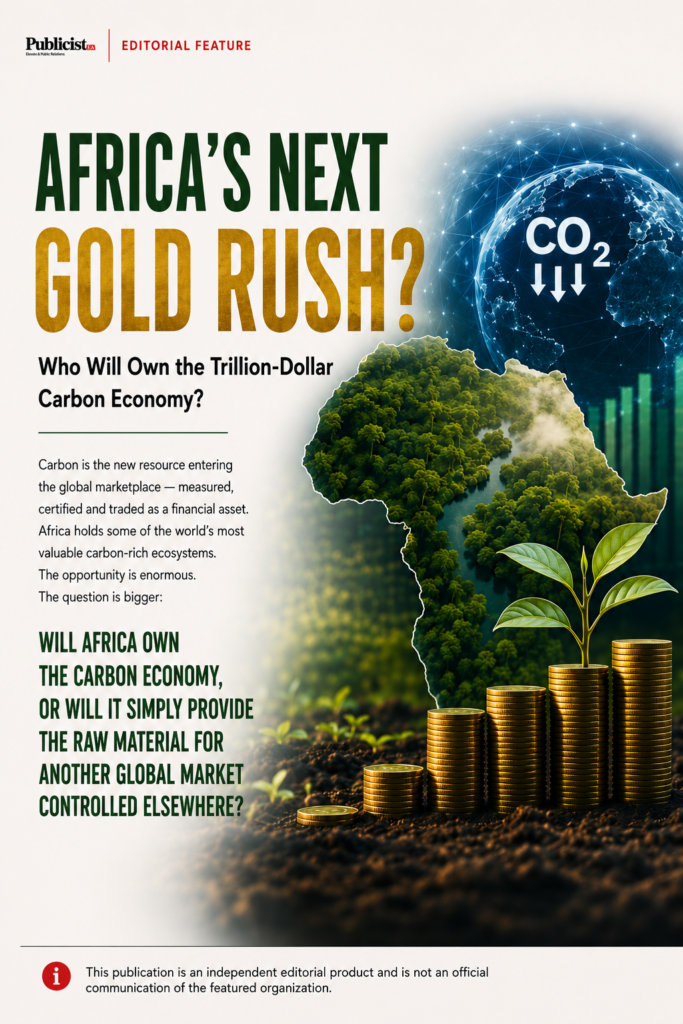
Now, a new resource is entering the global marketplace. Carbon.
Unlike gold or oil, carbon cannot be mined, shipped or stored in containers. It exists in forests, wetlands, grasslands and agricultural landscapes. It is measured through satellites, artificial intelligence, scientific models and environmental monitoring systems before being converted into financial assets traded in global markets.
The opportunity is enormous. Africa holds some of the world’s most valuable carbon-rich ecosystems, from the Congo Basin rainforest to East Africa’s wetlands and savannahs. These landscapes absorb and store carbon, providing an environmental service that is becoming increasingly valuable as governments and companies race to meet climate commitments.
Supporters believe carbon markets could transform conservation from an economic burden into an opportunity, rewarding communities that protect ecosystems, financing climate adaptation and creating new revenue streams for African economies. But beneath the promise lies a bigger question:
Will Africa own the carbon economy, or will it simply provide the raw material for another global market controlled elsewhere?
Because while Africa owns some of the planet’s largest carbon sinks, the financial systems built around carbon are increasingly controlled by international project developers, certification companies, brokers, investors and corporations.
Africa may own the forests. But who owns the market built around them? A carbon credit represents one tonne of carbon dioxide equivalent that has either been removed from the atmosphere or prevented from entering it. The concept behind carbon markets is simple. Companies with significant emissions can purchase credits generated by projects that protect forests, restore degraded land, improve agricultural practices, conserve wetlands or develop renewable energy.
The project receives financing. The buyer receives recognition for supporting climate action. But the journey from a forest to a carbon credit involves a complex chain of value creation. Scientists measure carbon stocks. Technology companies collect environmental data. Consultants design projects. Verification agencies certify credits. Brokers connect buyers and sellers. Investors provide capital before projects generate returns.
Each stage creates value. Each stage captures revenue. This creates a familiar economic dilemma for Africa: whether it will once again export a valuable resource while others control the highest-value parts of the business. The difference is that this time the resource is invisible.
Carbon is quickly becoming part of a new geopolitical competition.
As climate regulations tighten and companies pursue net-zero commitments, demand for credible carbon credits is expected to grow. Forests, wetlands and agricultural landscapes are no longer viewed only as environmental assets; they are becoming strategic economic resources. Countries with large natural ecosystems are attracting investors seeking access to carbon markets.
For Africa, this presents both an opportunity and a warning. The opportunity is clear. The continent could become one of the world’s largest suppliers of carbon credits. The risk is repeating an old economic pattern, allowing external actors to capture most of the wealth generated from Africa’s natural resources. The question is whether Africa will remain a supplier of carbon assets or become a competitor in the global carbon economy.
Uganda sits at an important point in this emerging market. The country’s forests, wetlands, conservation areas and agricultural landscapes represent significant carbon assets. Its tropical forests store carbon, while wetlands around ecosystems such as Lake Victoria provide critical climate and ecological services. Agriculture could also become a major opportunity.
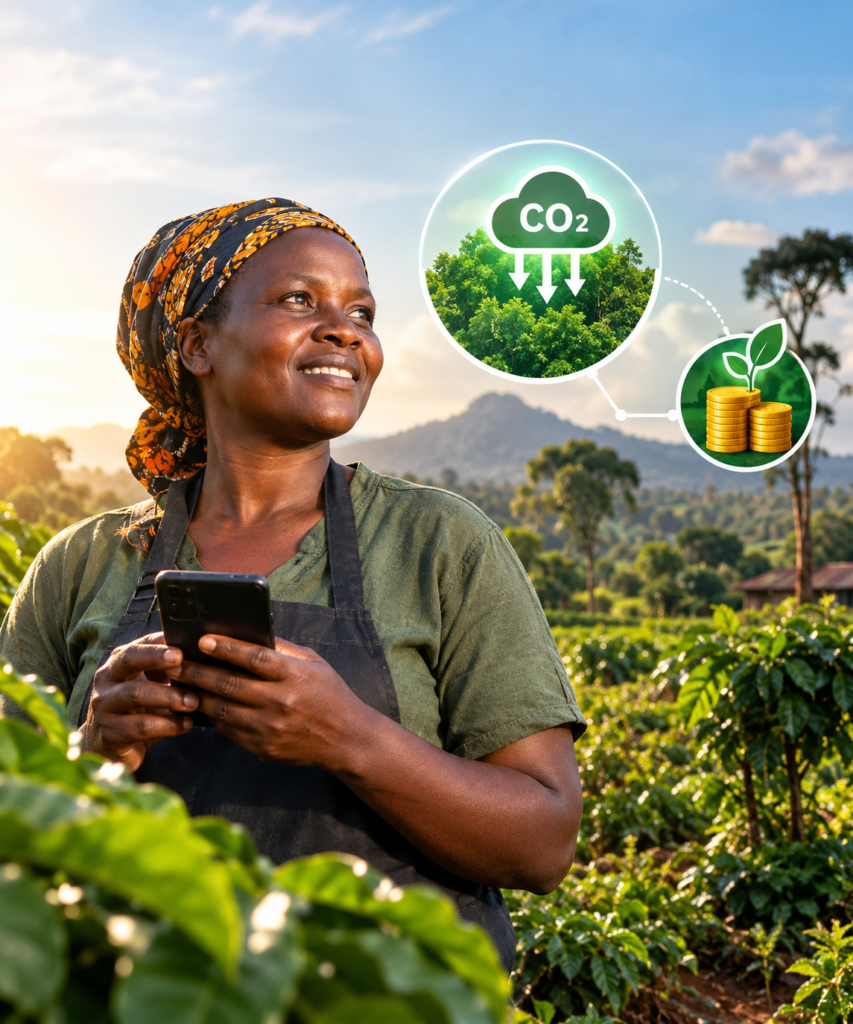
With millions of smallholder farmers, Uganda has the potential to develop carbon projects linked to climate-smart agriculture, agroforestry, improved soil management and sustainable farming practices.
This creates a new possibility: farmers could become participants in global climate markets, not only producers of coffee, maize and other commodities. A farmer managing soil health or planting trees could generate measurable environmental value alongside agricultural income.
But the success of this opportunity will depend on whether farmers and communities have the knowledge, technology and bargaining power to participate fairly. Without these systems, carbon markets risk becoming another arrangement where communities provide the resource while others capture the returns.
Africa’s carbon future will not be determined only by how much carbon it stores. It will be determined by who controls the systems that measure, certify and trade that carbon. The continent needs stronger carbon regulations that protect national interests, establish clear ownership rights and guarantee community benefits.
It also needs African companies building carbon projects, environmental technology platforms, data systems and verification expertise. The future value of carbon will not only come from forests. It will come from the ability to manage the information, technology and financial systems surrounding those forests. Carbon markets depend on trust. A carbon credit is only valuable if buyers believe it represents a real, measurable climate benefit.
That means investment in measurement, reporting and verification systems will be critical. Africa cannot build a competitive carbon economy if it depends entirely on external companies to measure the value of its own ecosystems.
At the heart of Africa’s carbon debate are the communities living around these ecosystems. Many forests, wetlands and conservation areas are located on lands where communities depend on natural resources for their livelihoods. The success of carbon markets will therefore depend on whether these communities become owners and beneficiaries or simply hosts of projects designed elsewhere. A sustainable carbon economy must involve transparent agreements, fair revenue sharing and meaningful participation.
Otherwise, carbon risks becoming another chapter in Africa’s long history of resource extraction.
Critics warn that carbon markets could allow wealthy countries and corporations to continue high emissions while using African carbon credits to claim climate progress. This has fuelled concerns about “carbon colonialism”, the fear that global climate solutions could reproduce old economic inequalities.
However, rejecting carbon markets altogether may not serve Africa’s interests.
The continent contributes a small share of historical emissions but faces some of the harshest consequences of climate change, including droughts, floods, food insecurity and changing weather patterns.
Africa needs climate finance. The challenge is ensuring that carbon finance supports African development rather than becoming another mechanism where value flows outward.
The winners of the carbon economy will not necessarily be those with the largest forests. They will be those who control the infrastructure around carbon data, technology, certification systems, financial markets and investment decisions. Africa therefore faces a strategic choice. It can become a low-cost supplier of carbon credits for global corporations.
Or it can build a competitive carbon industry where governments, businesses, researchers and communities capture a meaningful share of the wealth created from the continent’s natural assets.
For centuries, Africa exported physical resources. The next century may be defined by whether it can create wealth from invisible ones. Africa’s forests may help the world fight climate change. But the biggest economic question is this:
The world has began paying for carbon, will Africa own the opportunity, or will history repeat itself?