
Stanbic Bank Uganda is moving beyond the traditional role of a financial institution to become a strategic partner in the nation’s development. This was the central message at the 5th Stanbic Development Partner Organisations (DPOs) Roundtable, a unique forum that brought together government, the private sector, civil society, and international partners to co-create solutions for Uganda’s economic growth.
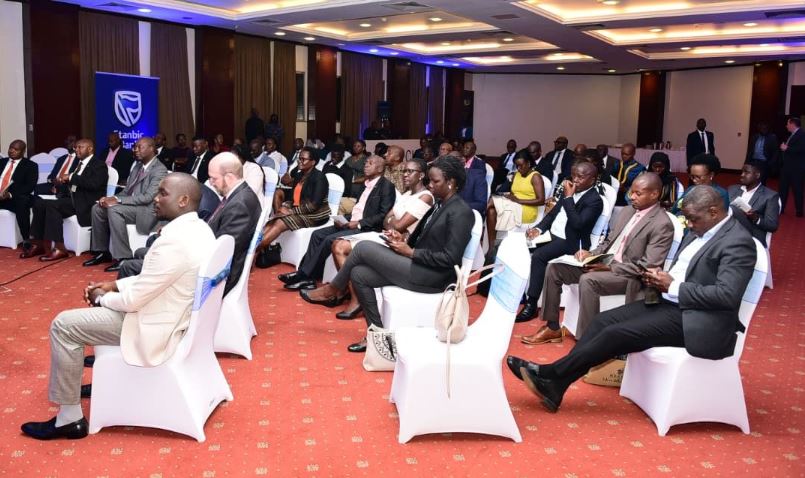
With the theme “Adapting to Shifting Global Priorities in Development Finance,” the roundtable, held in Kampala on Tuesday, September 16th, 2025, provided a critical platform for exploring innovative models of collaboration.
As Stanbic Bank Uganda’s CEO, Mr. Kenneth Mumba Kalifungwa, put it, “we’re not just financiers, we’re partners for sustainable impact.”
“This Round Table is about walking far together. At Stanbic, we are not just financiers, we are partners for sustainable impact. So, let’s lean into the dialogue and build actionable partnerships for Uganda’s growth,” Mr. Kalifungwa said.

This statement reflects the bank’s mission to combine the scale of a commercial bank with the purpose of a development actor, a sentiment echoed by Board Chair Mr. Damoni Kitabire, who emphasised that Uganda’s future lies in “resilience, not dependency.”
“Uganda’s future lies in resilience, not dependency. At Stanbic, we remain steadfast in being your partner of choice, combining the scale of a commercial bank with the mission of a development actor,” Mr. Kitabire told the roundtable.
A Strategic Shift from Dialogue to Action
The bank’s commitment to this new model is evident in its actionable initiatives that align with global development priorities, such as environmental, social, and governance (ESG) criteria.
The roundtable discussions focused on how to mobilise resources and innovate financing models to build resilience in a rapidly evolving global landscape.
This strategic focus, according to Kalifungwa, is designed to address key national challenges, including youth unemployment, agricultural productivity, and access to finance for underserved demographies.
Sustainable Development Ambitions
The bank’s efforts are not just theoretical. Through its Stanbic Business Incubator, Stanbic has directly impacted over 4,758 SMEs and trained more than 8,700 entrepreneurs, with a special focus on women, youth, and farmers (WYF).
The Incubator’s programs, such as the Albertine Agribusiness Development Programme, are designed to equip local farmers with climate-smart farming techniques and provide market linkages to major economic opportunities like the oil and gas sector.
This initiative, which benefits from partnerships with organisations like the National Social Security Fund (NSSF) and the Mastercard Foundation, is a prime example of how Stanbic is using its resources to build a more sustainable and inclusive economy from the ground up.
The Power of Co-creation
The DPO Roundtable highlighted the importance of co-creation and meaningful partnerships to achieve national transformation.
The insights shared by representatives from the Office of the Prime Minister, such as Mr. Richard Ssewakiryanga, and organisations like Finn Church Aid reinforced the idea that collective action is essential.
As Mr. Wycliffe Nsheka from Finn Church Aid stated, “Let us embrace new local solutions that blend investment, technology and partnerships to deliver sustainable impact in our communities.”
By bringing diverse stakeholders to the table, Stanbic Bank is not only leading the dialogue on development finance but also actively participating in the creation of a resilient and prosperous future for Uganda.
The roundtable is a testament to the bank’s commitment to delivering on its purpose: “Uganda is our home, we drive her growth.”